Business casual dress codes sound simple until you actually try to plan an outfit around them. The line between too formal and too relaxed is not always clear. Most offices never define it precisely, which leaves employees guessing.
This guide breaks down what business casual dress actually means today, along with 12 practical outfit ideas you can build from pieces you likely already own. You will also learn the small styling decisions that separate a polished look from one that misses the mark.
By the end, dressing for a business casual office should feel straightforward rather than confusing.
Quick Answer: What Business Casual Dress Actually Means
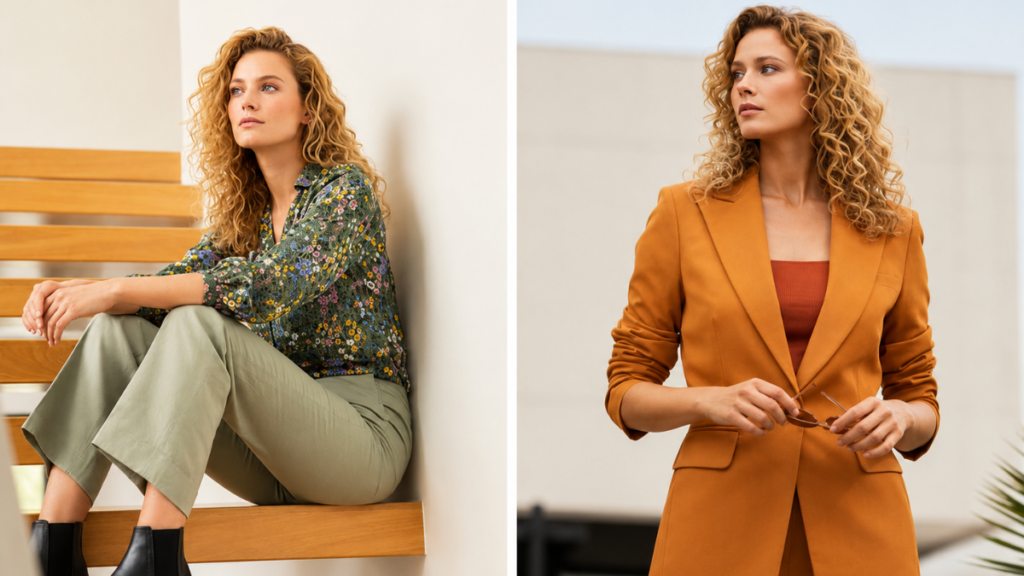
Business casual dress sits between formal office wear and everyday casual clothing. It usually includes tailored pieces like trousers, blouses, and blazers, without requiring a full suit. Denim, sneakers, and overly casual fabrics are typically avoided.
The safest approach is choosing structured pieces in simple, neutral colors. This keeps the outfit professional even in offices with looser dress codes.
The Main Guide: Understanding Business Casual Dress Rules
Know the Difference Between Business Casual and Business Formal
Business formal usually means a full suit, closed-toe shoes, and minimal color variation. Business casual dress allows more flexibility, like separates instead of matching sets. Understanding this distinction prevents both overdressing and underdressing.
Most offices fall closer to business casual than formal, especially outside client-facing roles. When unsure, dressing slightly more polished than the minimum is usually the safer choice.
Choose Structured Fabrics Over Casual Ones
Fabric choice has a bigger impact on a business casual dress than most people expect. Cotton, wool blends, and structured knits read as professional. Jersey, fleece, and overly stretchy fabrics tend to look too relaxed for office settings.
This does not mean sacrificing comfort. Many structured fabrics today are designed to move and breathe like casual clothing.
Build Around Neutral Colors With One Accent
A neutral base makes business casual dress easier to plan on busy mornings. Black, navy, gray, and beige all work well together and mix easily. One accent color, like burgundy or forest green, adds personality without disrupting professionalism.
This approach also reduces decision fatigue. A wardrobe built on coordinating neutrals means most pieces already match each other.
Pay Attention to Fit More Than Trends
Fit matters more than following current trends when it comes to business casual dress. A well-fitted blazer or trouser instantly looks more expensive and professional than an ill-fitting trendy piece. Tailoring inexpensive pieces often makes a bigger difference than buying pricier ones.
Loose or overly tight clothing can undercut an otherwise strong outfit. When possible, have key pieces like blazers and trousers tailored to your body.
12 Business Casual Dress Outfit Ideas
Classic Office Looks (Ideas 1–4)
- Idea 1: Tailored trousers, a tucked blouse, and a structured blazer. This is the most reliable business casual dress combination for daily wear.
- Idea 2: A knee-length pencil skirt with a fitted knit top and loafers. This works well for offices with a slightly more traditional dress code.
- Idea 3: Wide-leg dress pants with a button-down shirt and a slim belt. This suits conservative offices without feeling stiff or dated.
- Idea 4: A shirt dress layered under a cardigan with low block heels. This offers comfort while still meeting business casual expectations.
Hybrid and Modern Office Looks (Ideas 5–8)
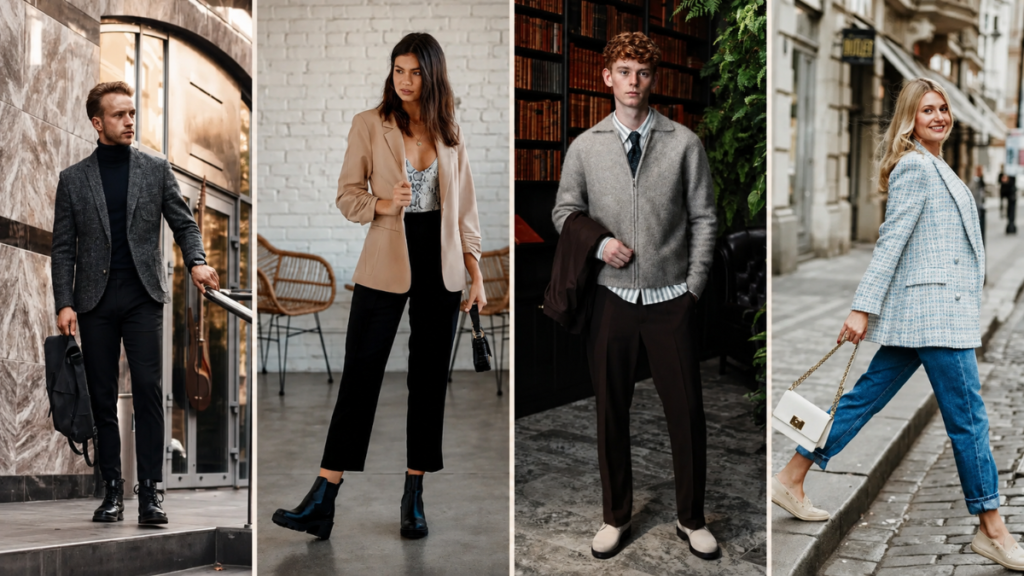
- Idea 5: Dark, structured jeans with a tucked blouse and a blazer. This bridges casual and formal for hybrid office environments.
- Idea 6: A midi skirt with a fine-knit sweater and ankle boots. This creates a modern business casual dress look for cooler months.
- Idea 7: Tailored culottes with a fitted top and pointed flats. This offers a fresh alternative to standard trousers.
- Idea 8: A jumpsuit in a structured fabric with a fitted blazer layered on top. This simplifies outfit planning while staying professional.

Meeting and Client-Facing Looks (Ideas 9–12)
- Idea 9: A tailored sheath dress with a cropped blazer and heels. This feels polished enough for client meetings or presentations.
- Idea 10: Matching trouser and blazer separates in a neutral tone. Coordinated separates read as intentional without being a full suit.
- Idea 11: A silk blouse tucked into tailored trousers with pointed-toe flats. This combination feels elevated while staying comfortable for long days.
- Idea 12: A wrap dress in a solid color with a structured tote. The wrap silhouette flatters most body types for important meetings.

Common Mistakes to Avoid With Business Casual Dress
Wearing clothing that is too casual is one of the most frequent mistakes with this dress code. Graphic tees, distressed denim, and athletic wear typically fall outside business casual standards. When unsure, choose the more polished option.
Ignoring fit is another common issue, even when the pieces themselves are appropriate. A blazer that is too large or trousers that pool at the ankle can undercut a professional look. Small tailoring adjustments often solve this quickly.
Overaccessorizing is a less obvious mistake that still affects business casual dress. Too many statement pieces can distract from an otherwise polished outfit. Choosing one or two accessories usually looks more intentional.
Extra Styling Tips You Can Use Right Away
Keep a blazer at your desk or in your car for unexpected meetings. This single piece can instantly elevate a slightly more casual outfit.
Invest in two or three pairs of well-fitted trousers rather than several lower-quality options. These become the foundation for most business casual dress outfits.
Choose shoes that can transition between sitting and walking comfortably throughout the day. Block heels and structured flats tend to hold up better than delicate styles.
Final Takeaway
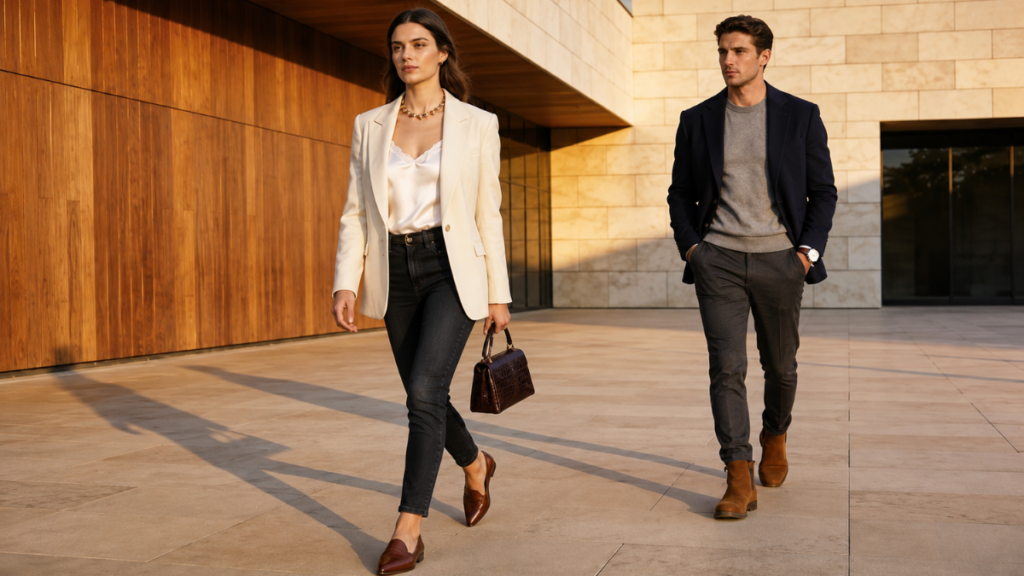
Business casual dress works best when built around structured fabrics, neutral colors, and well-fitted pieces. The goal is looking capable and put together without wearing a full suit every day.
Use these 12 outfit ideas as a foundation, then adjust them based on your specific office culture and personal style. A few reliable combinations make daily dressing far less stressful.
FAQs
What qualifies as business casual dress for women? Business casual dress typically includes tailored trousers, blouses, skirts, and blazers in structured fabrics. Denim, athletic wear, and overly casual pieces are usually avoided.
Can jeans be part of a business casual dress outfit? In some hybrid offices, dark, structured jeans paired with a blazer can work. This depends heavily on the specific company’s dress code culture.
What shoes are appropriate for business casual dress? Loafers, block heels, and closed-toe flats are all appropriate choices. Sneakers and sandals are generally best avoided in traditional business casual settings.
How is business casual dress different from business formal? Business formal usually requires a full matching suit and more conservative styling. Business casual dress allows more flexibility with separates and slightly more color variation.
What colors work best for business casual dress? Neutral tones like navy, black, gray, and beige form the most versatile base. One accent color can be added without disrupting a professional appearance.
Is a dress considered business casual? Yes, a tailored dress in a structured fabric and solid color usually fits within business casual dress standards. Pairing it with a blazer adds extra polish for meetings.
How can I make business casual dress feel less repetitive? Rotate accent colors, textures, and accessories while keeping the same core silhouettes. Small variations keep a business casual wardrobe feeling fresh without requiring many new pieces.
What should I avoid wearing under a business casual dress code? Avoid graphic prints, distressed fabrics, and overly casual footwear like flip-flops. These pieces typically fall outside standard business casual expectations.