Staring at a full closet and still feeling like you have nothing to wear is one of the most common style frustrations out there. It usually has nothing to do with owning too few clothes. It comes from not knowing how to combine what you already have.
This guide walks through 25 outfit ideas built around real situations, not runway trends. You will find combinations for work, casual days, dinners, travel, and formal events. Every look uses simple pieces you can find in most wardrobes or build over time.
By the end, you will have a clear system for putting outfit ideas together on your own, without needing to shop for something new every time an occasion comes up.
Quick Answer: What Makes a Good Outfit Idea Work
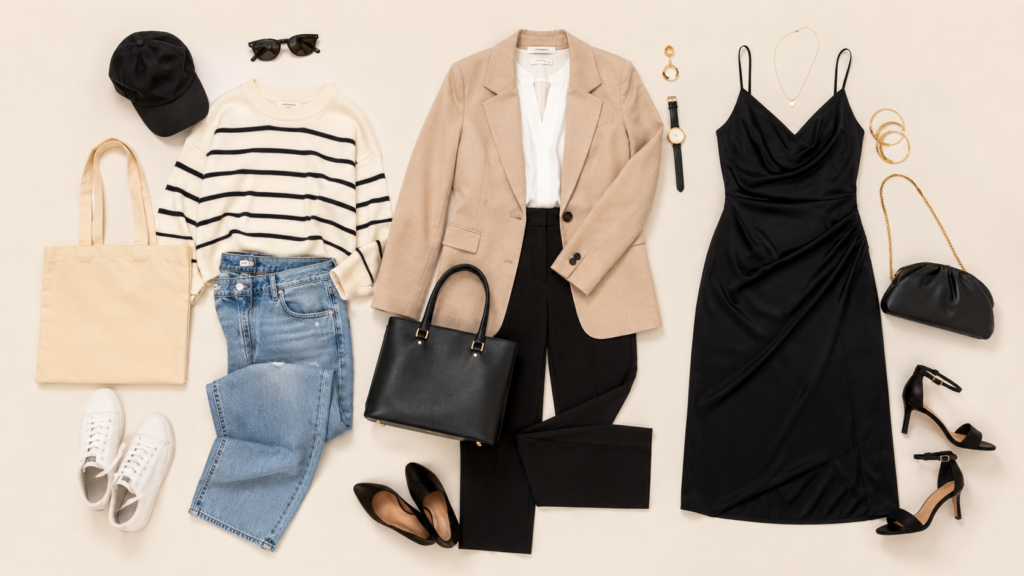
A strong outfit idea balances three things: fit, color coordination, and occasion appropriateness. Start with one anchor piece, like a blazer or a great pair of trousers. Build everything else around it using no more than three colors total.
Once that anchor piece is set, the rest of the outfit becomes much easier to plan. This same three-step approach works whether you are dressing for a meeting or a weekend brunch.
The Main Guide: How to Build Outfit Ideas That Actually Work
Start With Your Wardrobe Anchors
Every strong outfit begins with one dependable piece. This might be a tailored coat, a well-fitted pair of jeans, or a simple button-down shirt. Identify three or four anchor pieces in your closet before adding anything new.
Anchors matter because they set the tone for the entire outfit. A structured blazer signals polish, while a soft knit sweater signals ease. Choose the anchor based on the mood of the occasion first.
Use the Three-Color Rule
Limiting most outfits to three colors keeps things looking intentional rather than chaotic. One neutral base, one secondary tone, and one accent color usually works well. Black, navy, beige, and white all function as reliable neutrals.
This rule is flexible, not strict. Patterns and textures can count as one of your three colors if they carry a dominant tone throughout.
Match Proportions, Not Just Colors
Color coordination gets attention, but proportion is what makes an outfit feel balanced. Pairing a loose top with fitted bottoms, or a fitted top with wider trousers, creates visual balance. Two oversized pieces worn together often overwhelm the frame.
This principle applies across almost every outfit idea in this guide. Keep one half of the outfit closer to the body and let the other half have more movement.
Dress for the Occasion First, Trends Second
Trends can inspire small details, like a color palette or an accessory choice. The occasion should always decide the overall structure of the outfit. A trendy piece worn at the wrong event tends to look out of place rather than stylish.
Think of trends as seasoning, not the main dish. The foundation should always come from what the day actually requires.
25 Outfit Ideas for Every Occasion
Casual Everyday Looks (Ideas 1–6)
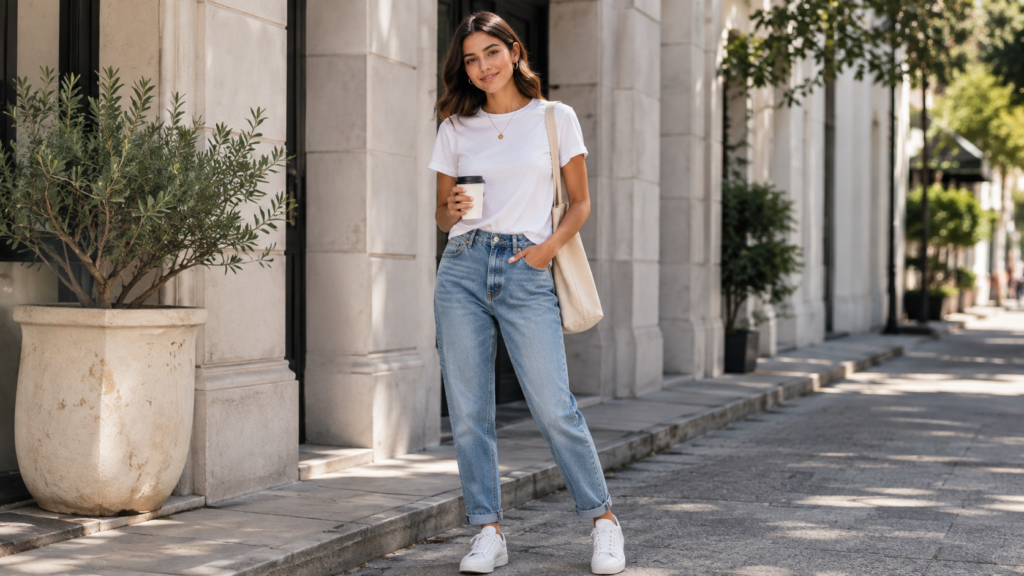
- Idea 1: Straight-leg jeans, a fitted white tee, and clean sneakers. This works because the simplicity lets fit do all the talking.
- Idea 2: Wide-leg trousers with a fitted turtleneck and loafers. The contrast in silhouette keeps this look sharp without trying too hard.
- Idea 3: A denim jacket layered over a plain hoodie with joggers. This combination balances structure and comfort for errands or travel days.
- Idea 4: A midi skirt paired with a fitted crewneck and ankle boots. This is an easy way to dress up basics without overthinking it.
- Idea 5: Cargo pants with a cropped jacket and simple sneakers. The utility details add interest without needing extra accessories.
- Idea 6: A cotton shirt dress belted at the waist with flat sandals. This works for warm-weather days that still call for a put-together look.
Work and Office Looks (Ideas 7–11)
- Idea 7: Tailored trousers, a tucked-in blouse, and a structured blazer. This combination reads as professional without feeling stiff.
- Idea 8: A knee-length pencil skirt with a fine-knit sweater and loafers. The fitted silhouette keeps this look polished for client meetings.
- Idea 9: Wide-leg dress pants with a fitted button-down and a slim belt. This is a reliable option when the dress code leans conservative.
- Idea 10: A shirt dress layered under a cardigan with low heels. It offers comfort while still meeting most business-casual expectations.
- Idea 11: Dark denim, a tucked blouse, and a blazer for hybrid offices. This bridges formal and casual dress codes smoothly.
Dinner and Date Night Looks (Ideas 12–16)
- Idea 12: A fitted slip dress with a tailored jacket layered on top. This adds structure to a soft silhouette for evening settings.
- Idea 13: Dark jeans with a silky camisole and pointed flats. The mix of casual and elevated pieces suits relaxed dinner spots.
- Idea 14: A wrap top with tailored trousers and heeled sandals. This combination flatters most body types through the wrap detail.
- Idea 15: A monochrome outfit in one deep color, like burgundy or emerald. Single-color dressing instantly looks intentional for evening occasions.
- Idea 16: A leather skirt with a fitted top and ankle boots. This adds edge to a date-night outfit without being overdone.
Weekend and Travel Looks (Ideas 17–21)
- Idea 17: Joggers, a soft crewneck, and clean white sneakers. This is ideal for airport days that still need to look pulled together.
- Idea 18: A linen shirt with rolled sleeves over shorts and sandals. This suits warm-weather travel and casual sightseeing.
- Idea 19: A long cardigan layered over a fitted tank and leggings. This works well for cooler travel days that need extra warmth.
- Idea 20: Overalls with a fitted long-sleeve top underneath. This is a practical option for hands-on weekend activities.
- Idea 21: A utility jumpsuit with sneakers and a crossbody bag. One-piece outfits simplify travel packing significantly.
Formal and Special Occasion Looks (Ideas 22–25)
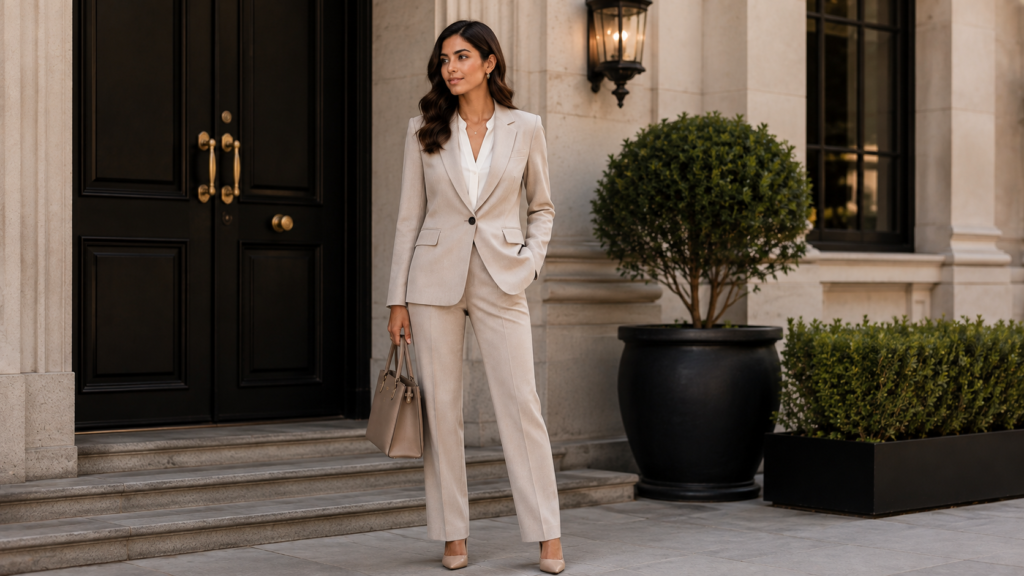
- Idea 22: A tailored suit in a neutral tone with minimal jewelry. Clean tailoring makes the strongest impression at formal events.
- Idea 23: A floor-length dress in a solid color with simple heels. Letting the silhouette lead avoids unnecessary visual clutter.
- Idea 24: A tuxedo-style jumpsuit with statement earrings. This offers a modern alternative to traditional formal dresses.
- Idea 25: A satin blouse with wide-leg trousers and heels. This combination feels formal while staying comfortable for longer events.
Common Mistakes to Avoid With Outfit Ideas
One frequent mistake is copying an outfit idea exactly instead of adapting it to your own proportions. What flatters one body shape may not flatter another, even with the same pieces. Adjust fit and length before worrying about matching every detail.
Another common issue is ignoring the occasion’s actual dress code. An outfit that looks great on social media might feel wrong for the specific event in front of you. Always check the setting before finalizing a look.
Overloading an outfit with too many trends at once is another pitfall. Mixing five different trend pieces usually looks busy rather than stylish. Choose one or two trend elements and let the rest of the outfit stay simple.
Extra Styling Tips You Can Use Right Away
Keep a mental list of your five most versatile pieces. These are the items that work across the most occasions with small adjustments.
Try the outfit on before the day you need it, not the morning of. This gives you time to fix fit issues or swap pieces if something feels off.
Accessories can shift an outfit’s formality level without changing the clothing itself. A structured bag and heels push a casual dress toward evening-appropriate, while sneakers pull the same dress toward daytime.
Final Takeaway
Good outfit ideas do not require a constantly growing wardrobe. They require a clear system: one anchor piece, a limited color palette, and balanced proportions. Once that system feels natural, building new outfit ideas becomes far less stressful.
Use the 25 combinations in this guide as a starting point, then adjust them to fit your own style and body. The goal is confidence, not perfection.
FAQs
How many outfit ideas should I plan for a week? Five to seven outfit ideas usually cover a full week comfortably. This allows for repeats and small variations without feeling repetitive.
Can I reuse the same outfit idea for different occasions? Yes, many outfit ideas can shift occasions with small changes. Swapping shoes or adding a jacket often makes a casual look work for something more formal.
What is the easiest outfit idea for beginners to try first? The three-color rule paired with one anchor piece is the easiest starting point. It removes most of the guesswork from daily outfit planning.
Do outfit ideas need to follow current trends? No, trends are optional additions rather than requirements. A well-fitted, balanced outfit will always look current, regardless of seasonal trends.
How do I adapt outfit ideas for different body types? Focus on proportion rather than copying an exact silhouette. Adjust hemlines, fit, and layering to suit your own shape while keeping the color and structure similar.
What is the biggest mistake people make with outfit ideas? Ignoring the occasion is the most common mistake. An outfit can be stylish and still feel wrong if it does not match the event’s dress code.
How can I make casual outfit ideas look more polished? Adding one structured piece, like a blazer or tailored trouser, instantly elevates a casual outfit. Clean, well-fitted shoes also make a noticeable difference.
Pingback: 15 Stunning Casual Date Night Outfit Ideas (2026
Pingback: 12 Stunning Business Casual Dress Ideas for Work (2026)
Pingback: 20 Cute Fall Outfits That Feel Effortless (2026)
Pingback: Black Dress Trousers Womens: 12 Amazing Outfit Ideas (2026)
What’s up to all, because I am truly eager of
reading this website’s post to be updated on a regular
basis. It consists of pleasant information.
Thanks very interesting blog!
Thanks For Postive Review its our pleasure
Why visitors still use to read news papers when in this technological world the whole thing is accessible on web?