
Ever feel like your closet is full of clothes, yet you still have nothing to wear? You are not alone. The problem often isn’t having too few clothes. It’s having pieces that don’t work well together.
That’s exactly where a capsule wardrobe makes a difference. If you have been wondering what is a capsule wardrobe, it is a carefully chosen collection of versatile clothing that makes getting dressed easier, faster, and more enjoyable. Instead of buying more clothes, you focus on pieces that mix and match effortlessly, creating more outfits with less clutter.
The best part? You don’t need to throw away your favorite clothes, follow strict minimalist rules, or spend a fortune on new basics. In this guide, you’ll discover how a capsule wardrobe works, how many pieces you actually need, and the 10 essential items worth building around. You will also learn how to create a wardrobe that fits your personal style, daily routine, and budget using clothes you may already own.
What Is a Capsule Wardrobe, Exactly?
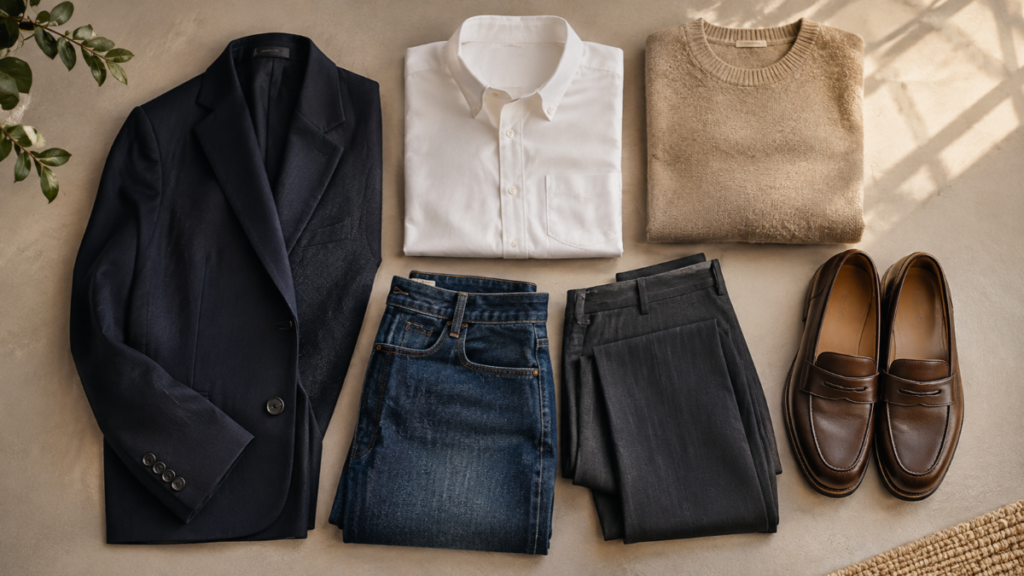
A capsule wardrobe is a limited collection of versatile pieces chosen to mix and match. It is built around a shared color palette and a few consistent silhouettes. That shared logic is what makes the pieces work together.
It is not a rule about owning exactly 30 or 40 items. Those numbers are popular starting points, not requirements. The useful test is simple: if a piece can’t pair with at least three or four others, it doesn’t belong in the capsule.
A capsule also doesn’t mean having no personality. It can be all neutrals, or it can be built around two bold colors you love. What matters is that the pieces relate to each other.
How a Capsule Wardrobe Actually Works
The Three Layers of Decision-Making
A capsule starts with a color palette, usually two or three base colors plus one or two accents. Next come a few repeating silhouettes, like straight-leg trousers and a relaxed top. Last are the anchor items, such as a blazer or a good pair of boots.
Why the Math Works in Your Favor
Five tops and four bottoms already create twenty top-and-bottom pairings. Add two layers and two pairs of shoes, and you have more combinations than you’ll wear in a month. Not every pairing will be great, but most will be wearable.
This is why a capsule saves time. Choosing from 15 pieces that all match is faster than choosing from 60 that mostly don’t.
How Many Pieces Do You Need?
There is no correct number. The right size depends on your routine, your climate, and how often you do laundry.
A Smaller Capsule (20 to 25 Pieces)
This suits a simple routine with one dress code. It’s easier to manage, but you’ll repeat pieces more often.
A Larger Capsule (30 to 40 Pieces)
This works better if your week mixes office days and casual weekends. It feels less repetitive, but needs more planning to keep everything coordinated.
Seasonal Capsules
If you live somewhere with four distinct seasons, many people build two smaller capsules instead of one large one. This keeps each set focused on the weather you’re actually dressing for.
The 10 Core Pieces to Start With
You don’t need to buy all of these. Check your closet first, and treat this list as a pattern to fill with what you already own.
Tops and Layers
- A white or cream button-down shirt. It works alone, under knitwear, or open over a tee.
- A fine-knit sweater in a neutral shade. Thin knits layer better than chunky ones, which matters when you’re mixing pieces.
- Two plain tees in your base colors. These are the quiet workhorses of the capsule.
- A blazer. This is the fastest way to make a casual outfit look finished.
Bottoms and Dresses
- Straight-leg jeans in a dark wash. Dark denim dresses up more easily than light denim.
- Tailored trousers. These carry the capsule into office or dinner settings.
- A versatile dress or skirt. A midi length in a solid color works across most seasons.
Outerwear and Shoes
- A trench or similar everyday coat. Choose one that works over both casual and dressier outfits.
- Comfortable everyday shoes. Loafers or clean sneakers cover the most situations.
- One dressier shoe. A low block heel or ankle boot covers evenings and formal days.
If you prefer color over neutrals, swap the cream shirt for a soft blue one and the neutral sweater for a deep green. The structure stays the same. Only the palette changes.

One Capsule, Many Outfits
Here is how a small set of pieces becomes different outfits. All of these use the 10 core pieces above.
For a Workday
Wear tailored trousers, the white shirt, the blazer, and loafers. If the office is more casual, swap the trousers for dark jeans and keep everything else.
For a Relaxed Weekend
Wear the straight jeans with a plain tee and clean sneakers. Drape the knit sweater over your shoulders if the evening cools down.
For Dinner
Wear the midi dress with the trench coat and the dressier shoe. The same dress can work for a workday with the blazer and loafers, which shows how one piece changes with its context.
Each outfit teaches something different. The first shows how one swap changes formality. The second shows how layers adjust to weather. The third shows how one dress works in two settings. For more occasion-specific combinations, our guide to outfit ideas for every occasion shows how this same mixing logic extends to more settings.
How to Build a Capsule From What You Already Own
Step 1: Pull Out What You Actually Wear
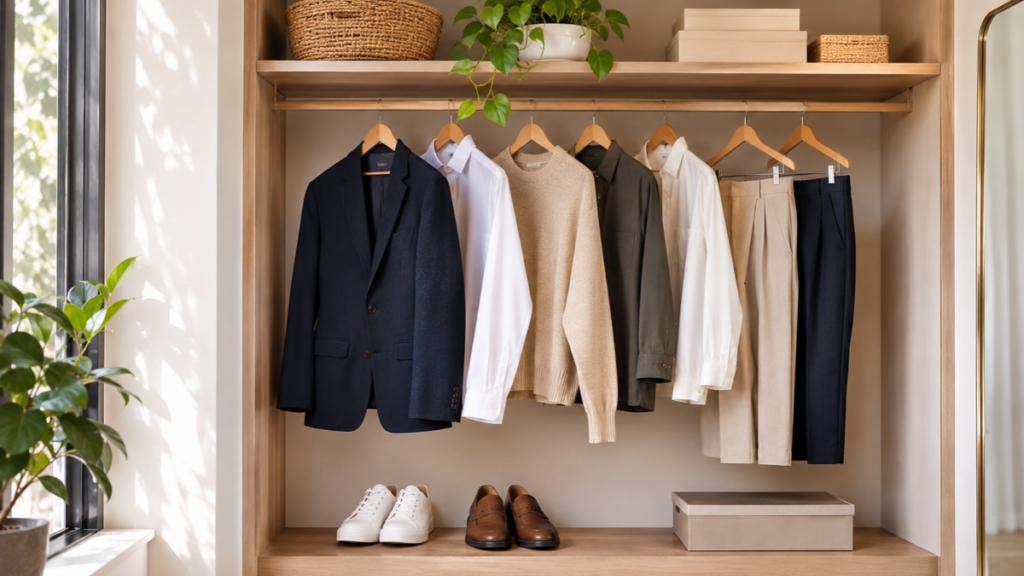
Gather everything you wore in the last month. These pieces already prove they fit your life. Group them by color, and you’ll probably see two or three shades appear repeatedly.
Step 2: Set Aside What Doesn’t Pair
Remove pieces that fit poorly or don’t pair with at least three other items. You don’t have to donate them. Store them separately and revisit them in a month. If you haven’t missed them, they likely don’t belong in the capsule.
Step 3: Fill Only the Real Gaps
A missing pair of trousers or a missing layer is easy to spot once the rest is organized. Fill only the gaps that block real outfits, instead of buying to match a template.
Is a Capsule Wardrobe Right for You?
A capsule works best if you feel overwhelmed by choice, repeat the same few outfits anyway, or want clearer purchasing decisions. It is especially useful when your routine is predictable.
It may feel restrictive if you enjoy experimenting with trends or dressing very differently from day to day. In that case, a partial capsule works well. Build a core of 15 or so pieces, and keep a separate section of expressive items outside the system.
If your seasons change a lot, build the capsule around the season you’re in. Our guides to winter dresses and casual summer outfit ideas show how fabric and layering choices shift between seasons.
Common Capsule Wardrobe Mistakes
Building Around a Style You Think You Should Have
If you rarely wear blazers, don’t make one an anchor piece because a list says so. Build around what you actually reach for.
Choosing Everything in the Same Color
A fully beige capsule can look flat. Add contrast through texture, like a knit against smooth cotton, or through one accent color.
Buying Too Much Too Quickly
A capsule works best when each piece earns its place. Wait until you’ve identified real gaps before spending anything.
FAQs
What is a capsule wardrobe in simple terms?
It is a small collection of clothes that all work together. Each piece mixes easily with most of the others, so you can create many outfits from a limited number of items.
How many clothes should a capsule wardrobe have?
There’s no single correct number. Many people start between 20 and 40 pieces, depending on routine and climate. Adjust based on how often you do laundry and how varied your week is.
Do I have to buy new clothes to build a capsule wardrobe?
No. Most people can build a first version from their existing closet. Buy new items only to fill specific gaps, like a missing layer or pair of shoes.
Can a capsule wardrobe include colorful clothes?
Yes. A capsule is defined by how well the pieces work together, not by being neutral. Choose two base colors and one or two accents, and keep the rest consistent.
Is a capsule wardrobe the same as minimalism?
Not necessarily. Minimalism is a broader lifestyle approach. A capsule wardrobe is a practical styling system you can adopt without changing how you shop or live in other areas.
Should I build separate capsules for each season?
If your climate changes a lot, yes. A smaller seasonal capsule is easier to manage than one set that tries to cover every temperature range.